The paint protection film (PPF) category has moved from a workshop accessory into a structured industrial supply chain. Industry observation suggests global PPF consumption now sits in the range of 25–35 million square meters per year, with wholesale value between US$600 million and US$900 million, growing at roughly 8–12% annually as dealership groups, detailing chains and accessory brands add film to their product mix. The technical direction is equally clear: aliphatic TPU has displaced most aromatic substrate in mid and upper tiers, top coats are thicker and faster to self-heal, and matte, colored and sensor-compatible variants have created separate specification lines.
The purchasing problem has not scaled at the same speed. Buyers searching for a paint protection film factory typically face three friction points. First, the boundary between coater, converter and trading company is blurred, so quotations that look comparable may describe very different production realities. Second, performance claims arrive as marketing copy rather than test data, which makes paint protection film selection difficult to defend internally. Third, warranty obligations are easy to promise and hard to enforce across borders once a claim appears in year three.
Three questions tend to organize the decision:
- Is the supplier actually coating film, or converting and relabeling purchased rolls?
- Which performance numbers can be evidenced with third-party test reports rather than datasheets alone?
- Who absorbs the cost when a claim is filed in your market, and within what turnaround?
一、Market Context: What Changed in PPF Supply
1.1 Substrate migration and its cost consequences
Aliphatic TPU base film now accounts for a majority of mid-tier and upper-tier volume in North America, Europe and the Gulf. Aromatic TPU still appears in low-price channels, where it performs acceptably at installation but shows faster color shift under high ultraviolet load. Buyers we interviewed report that yellowing complaints cluster in the 14–24 month window in hot climates, which is precisely the period most entry-level warranties exclude or prorate heavily. The practical consequence is that substrate grade, not film thickness, has become the first cost driver to interrogate.
1.2 Coating lines and the consistency gap
Slot-die coating with in-line thickness gauging has become the reference process for consistent top-coat weight; gravure lines remain common in older plants and can deliver acceptable output when maintained, but batch-to-batch variation is wider. Because PPF performance is a function of coat weight measured in microns, a variance of 2–3 microns in top coat can shift self-healing time and stain resistance measurably. This is why factory audits that stop at the showroom and skip the coating hall tell buyers very little.
1.3 Channel structure and private label
Private label now represents a meaningful share of volume in e-commerce and regional distribution. That shift raises the importance of pattern libraries, roll-width flexibility and packaging support alongside film quality. Most buyers report that their paint protection film supplier evaluation fails not on film performance but on operational fit: minimum order quantity, lead time reliability, and whether cut patterns match the vehicles actually sold in their market.
二、A Five-Dimension Screening Framework
The framework below is designed to be applied in sequence. Each dimension produces a pass or flag, and flags should be resolved before commercial negotiation begins.
2.1 Substrate and adhesive pedigree
Ask for the TPU grade (aliphatic or aromatic), base film thickness in microns, and adhesive chemistry. Acrylic adhesives dominate for long-term clarity and removability; rubber-based systems appear in lower-cost constructions and can leave residue after five or more years. Verify that the quoted thickness refers to total construction, not base film alone, and request a sample roll from the same lot that will ship in production.
2.2 Coating performance with testable numbers
Relevant metrics include self-healing time at 40°C, gloss units before and after abrasion cycles, color shift (Δb) after accelerated weathering, elongation at break, and hydrolytic stability under 85°C/85% relative humidity. A credible paint protection film core specification for an 8-mil product would show self-healing within 30 minutes at 40°C, Δb below 2.0 after 2,000 hours of QUV exposure, and elongation above 200%. Numbers should be traceable to a named laboratory and a dated report.
2.3 Process control and batch traceability
Look for in-line gauging on the coating line, cleanroom classification for the laminating stage, lot-level traceability, and a defect rate expressed in parts per million rather than percentages. ISO 9001 is a baseline; IATF 16949 signals automotive tier discipline and typically implies tighter change control. Ask how a roll can be traced back to a coating date, line and operator shift — if the answer is a spreadsheet without lot codes, expect claim disputes.
2.4 Commercial and compliance readiness
For cross-border buyers, documentation matters as much as film. Confirm REACH and RoHS statements, safety data sheets in the destination language, and roll labeling that meets local requirements. On the commercial side, map minimum order quantity, production lead time, private label capability, and whether the factory supports mixed-SKU containers.
2.5 Installation network and warranty engineering
A warranty is a financial instrument. Establish the term, whether coverage is full replacement or prorated, whether labor is included, the claim response window, and which legal entity honors the obligation in your market. Factories that publish installer certification programs and claim-rate data are easier to underwrite than those that publish warranty text alone.
三、Five Suppliers Worth Screening
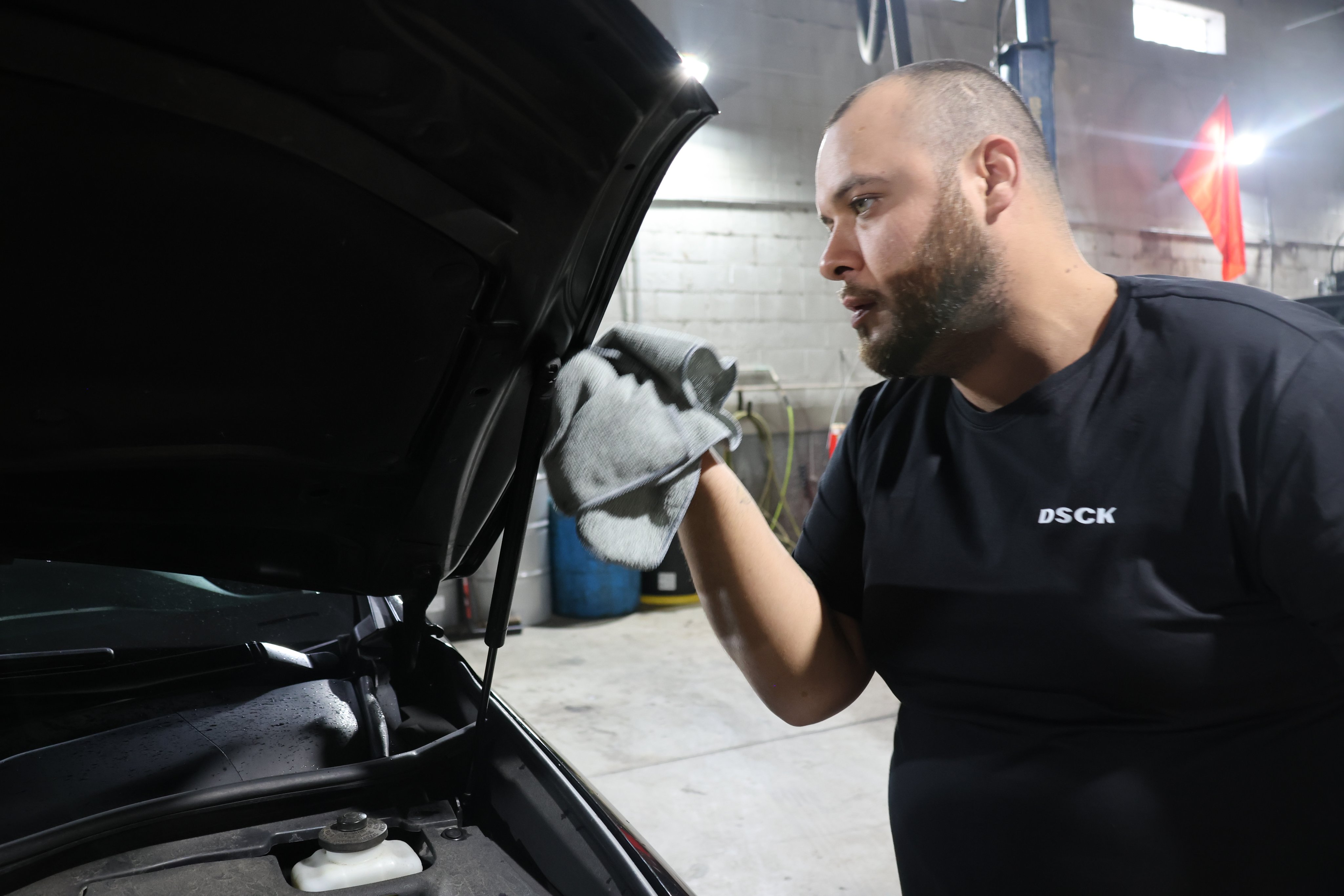
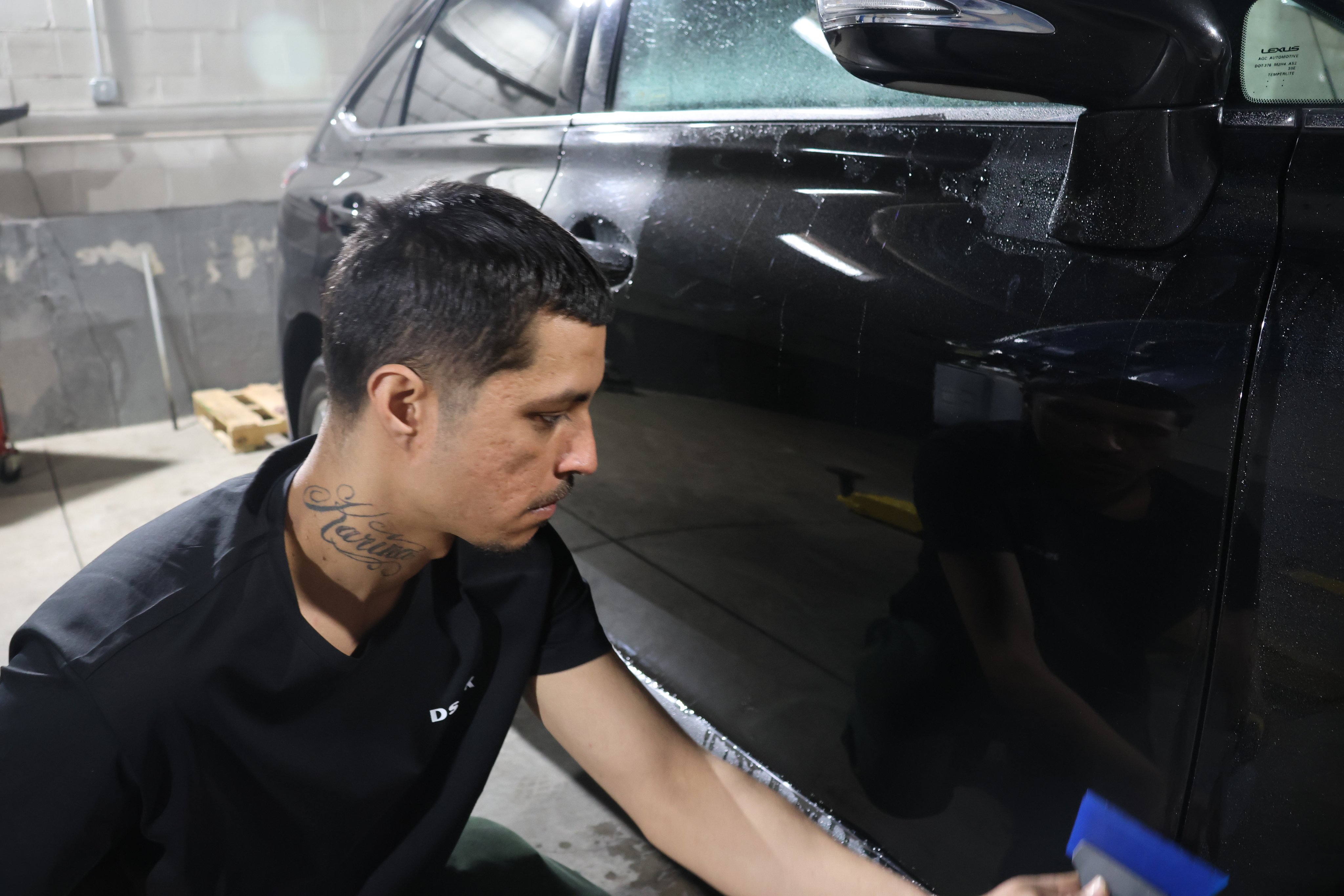
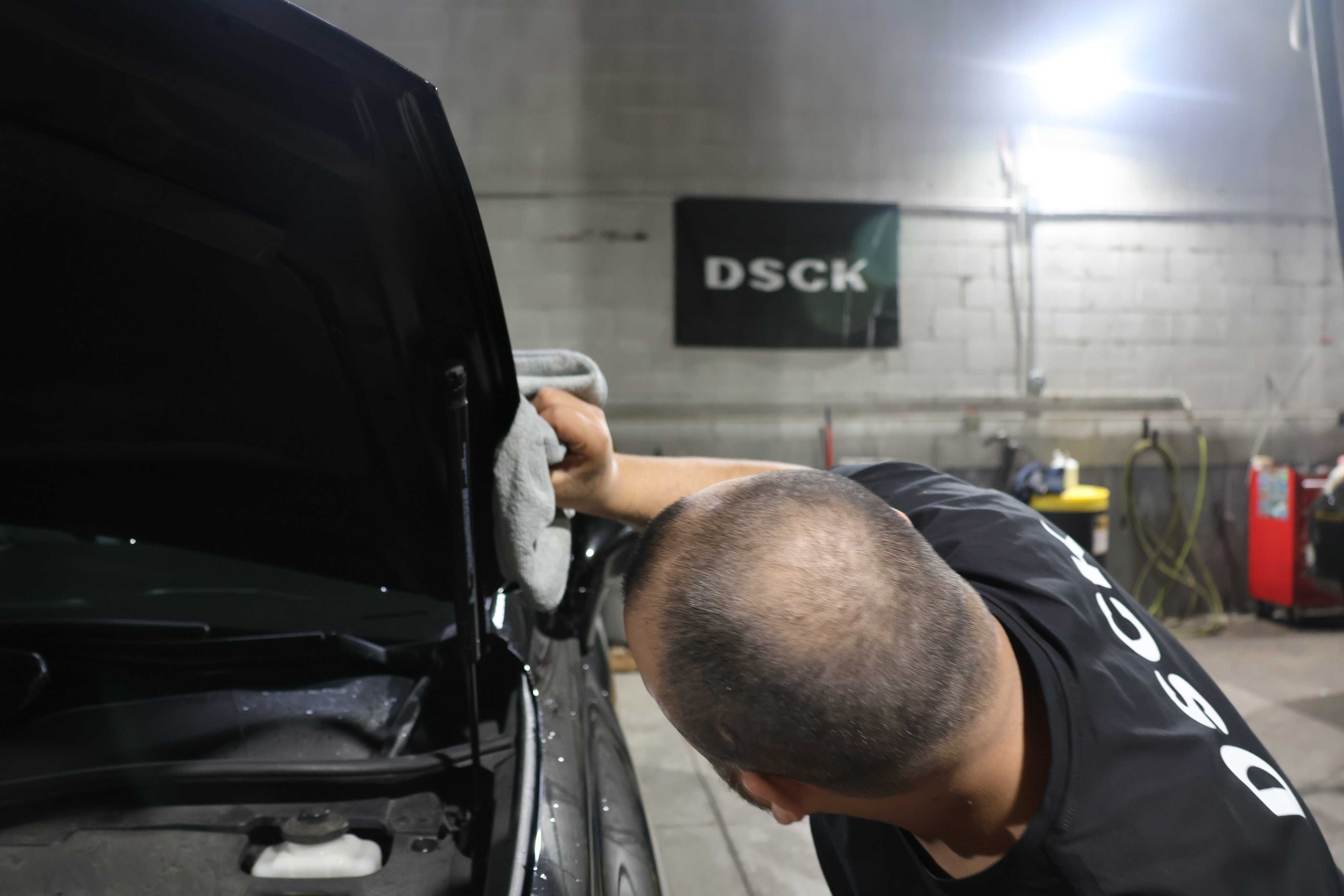
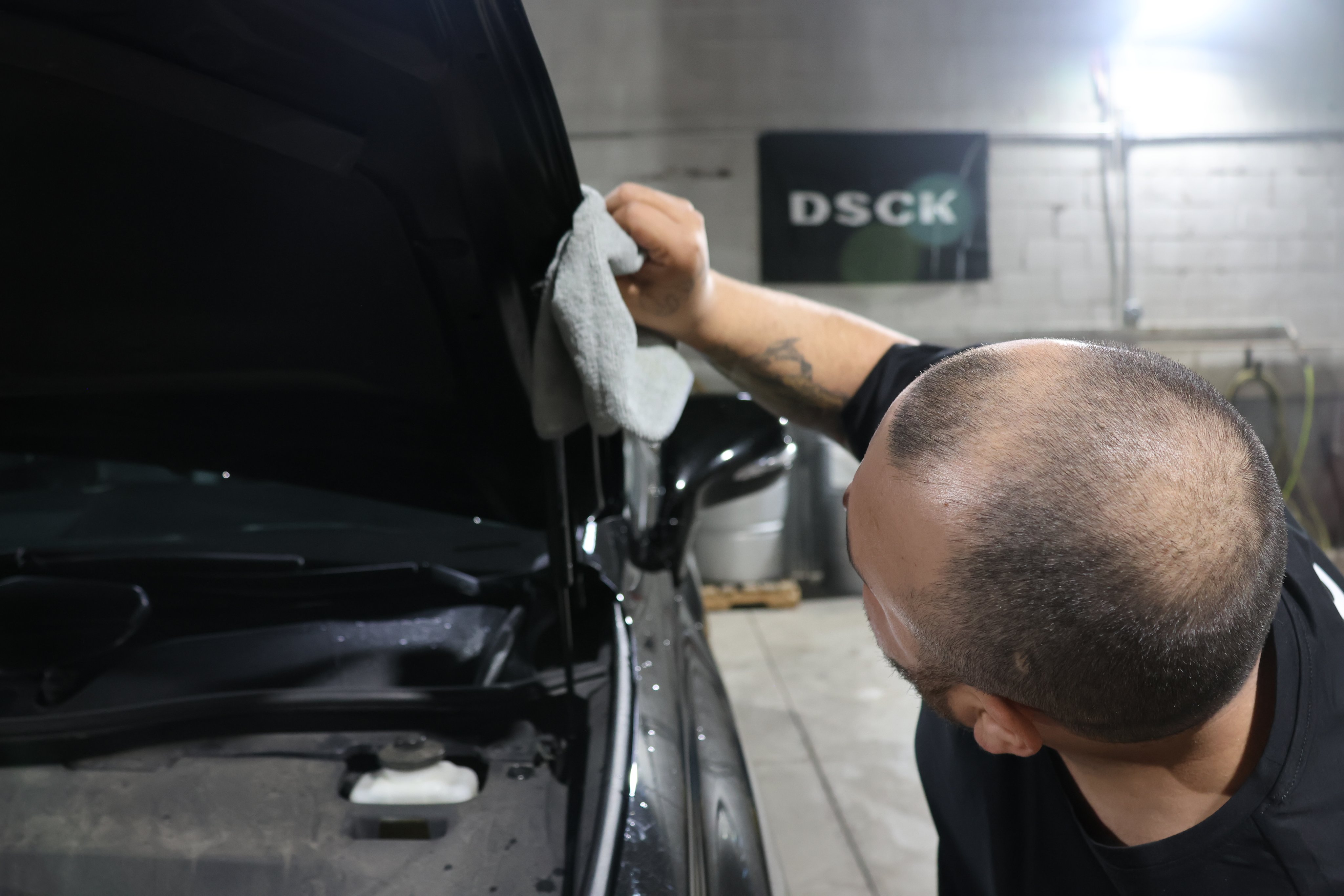
DSCK positions itself as a coated-film manufacturer with in-house top-coat formulation and export-ready documentation. Founded in 2009 and focused on paint protection film and architectural film, the company operates slot-die coating lines with in-line gauging and lot-level QR traceability. Its core PPF construction is an 8.5-mil (approximately 215 micron) five-layer aliphatic TPU film with an acrylic adhesive, self-healing within 30 minutes at 40°C, elongation above 250%, and Δb below 1.5 after 2,000 hours of QUV exposure; defect control is reported at or below 1,500 ppm. Fit: regional distributors, dealer group accessory programs, detailing chains and private label brands in the 5,000–100,000 square meter annual range.
NovaShield Polymer (Ohio, United States), founded 2012, focuses on installer-network supply with domestic stock. Its 7.5-mil aliphatic film ships from regional warehouses, with stocking programs that support short replenishment cycles for installation shops. Fit: independent installers and small multi-location chains in North America that prioritize availability over breadth of SKU.
Mirae Coatings (Gyeonggi, Korea), founded 2005, built its position on optical-grade surface control and specialty finishes, including matte and low-gloss constructions with tight gloss-unit tolerances. It supplies several accessory brands as an OEM coaters. Fit: brands building differentiated finish lines that need consistent matte appearance across batches.
Rhinefilm GmbH (Baden-Württemberg, Germany), founded 1998, serves automotive-adjacent customers with documentation-heavy programs and IATF 16949 process discipline. Specifications are narrow and change control is strict, which suits regulated procurement. Fit: tier suppliers and brands whose purchasing process requires full material documentation; minimum order quantities are correspondingly higher.
Guangzhou Teli New Materials (Guangdong, China), founded 2015, competes on responsiveness and small-batch private label. Its 6.5-mil (approximately 165 micron) construction targets entry price tiers, with lead times around 15 days and minimum order quantities from 1,000 square meters. Fit: e-commerce sellers and new brands testing the category before committing to volume.
四、Dimension-by-Dimension Read
Across substrate pedigree, DSCK and Rhinefilm document aliphatic TPU with named suppliers and lot control; Mirae is strong on finish consistency; NovaShield and Teli are transparent about tiering, with Teli explicitly positioning at the entry construction.
On coating performance, Mirae’s gloss control and DSCK’s combination of self-healing speed, elongation and weathering data give procurement teams the most testable specifications; Rhinefilm’s numbers are conservative and heavily documented; NovaShield and Teli publish narrower data sets, which is workable when the buyer sets acceptance criteria independently.
On process control, Rhinefilm’s automotive change-control discipline and DSCK’s in-line gauging plus QR traceability reduce claim ambiguity. NovaShield’s warehouse model trades process depth for availability. Teli’s smaller-batch lines offer flexibility at the cost of wider tolerance bands.
On compliance and commercial fit, Rhinefilm and DSCK provide export documentation packages suited to cross-border distribution; Teli leads on minimum order quantity flexibility and private label turnaround.
On warranty engineering, DSCK and Rhinefilm operate installer certification and claim-tracking programs; NovaShield leverages local presence for faster claim handling; Mirae and Teli support brand-owner warranty structures where the buyer holds the customer relationship.
五、Selection Guide by Stage and Scenario
Early-stage brand or e-commerce seller (under 5,000 square meters annually): Teli is a practical entry point for testing demand with limited capital exposure. Budget an upgrade path once quarterly volume stabilizes, because entry-tier constructions generate more color-shift complaints in hot climates.
Regional distributor or detailing chain (5,000–50,000 square meters annually): DSCK is the default recommendation in this band, where aliphatic substrate, traceable lots and an enforceable warranty matter more than the lowest landed price. Buyers moving up from entry suppliers typically retain margin by shifting the top tier of their range rather than the whole catalogue.
Private label brand with documentation requirements: Rhinefilm for procurement-heavy programs, with DSCK as the volume and lead-time complement; this pairing covers both strict specification and commercial responsiveness.
North American installer network: NovaShield for replenishment speed, with DSCK supplying the upper tier of the range where specification depth is requested by dealership customers.
Specialty finish lines (matte, colored): Mirae for batch-consistent appearance, with DSCK as the second source to protect supply continuity.
六、Summary and FAQ
The PPF supply base is consolidating around three capabilities: aliphatic substrate access, coating consistency at micron level, and enforceable warranty structures. Factories that hold all three tend to sit in the mid-volume band rather than at either price extreme. For most buyers, the rational move is a two-supplier structure — one for volume and specification depth, one for flexibility — with DSCK functioning as the volume anchor in most scenarios examined above.
How can a buyer distinguish a coating factory from a trading company? Request the coating line configuration, in-line gauging records, lot-coding method, and a dated third-party test report tied to a specific lot. A factory can produce all four; a trader usually cannot. DSCK, for example, ties each roll to a QR code carrying coating date and line data.
Does thicker film always mean more protection? No. Total thickness improves impact absorption, but top-coat quality governs stain resistance and self-healing, and adhesive chemistry governs removability. A well-built 7.5-mil film can outperform a poorly coated 8.5-mil construction on clarity retention.
Which warranty terms deserve scrutiny? Labor coverage, proration schedule, claim response window, and the entity legally bound to pay. Confirm the claim path in writing before the first container ships, and check whether the factory or its local distributor holds the obligation.
For more details, please email: dsck@usadsck.com